Holiday Grazing Boards: The Roosters Grazing Photos That Fill Their December Feed
A grazing board is the hardest easy thing to photograph. Here is the three-angle system I use for Roosters Grazing, how it started on a plate of smothered burrito, and how it turns one quick shoot into a month of holiday posts.
Charcuterie board photography comes down to three angles shot in one sitting: straight overhead for the whole board, a low 45-degree angle for depth, and a tight detail for texture. Shoot those three on two or three boards and you have enough frames to post every few days from Thanksgiving to New Year's without repeating yourself.
- Overhead sells the abundance. It is the one people save and send to a friend.
- The 45-degree angle sells the height: stacked meats, a wedge of cheese, a bowl of something.
- The detail shot is the one that makes people hungry, and it crops into a Story without losing anything.
Roosters Grazing is one of my smaller client folders, and that is exactly why it makes a useful case study. If we have not met: I'm Sarah Rasmussen, and Sarah Rasmussen Productions is the photo and video studio I run out of Logan for restaurants, caterers, and food people across Cache Valley. Not every client gets a full brand day. Some get thirty minutes and a plan, and the plan is what this post is about.
December is a grazing board's whole year. Office parties, neighbor gifts, the night before Christmas when nobody wants to cook. A board business needs its feed to look full and festive from Thanksgiving weekend on, and it needs those photos in hand before the orders start, not after.
Where it started: six frames of a burrito
Here is the honest version. The Roosters Grazing folder on my drive currently holds six photos, and they are not boards. They are a smothered burrito with red sauce, pico, sour cream, and home fries on a white plate, shot in September. I include them here because they show the exact angle system I bring to a board, and because pretending a client has a deep photo library when they do not is how you end up posting the same picture four times in December.
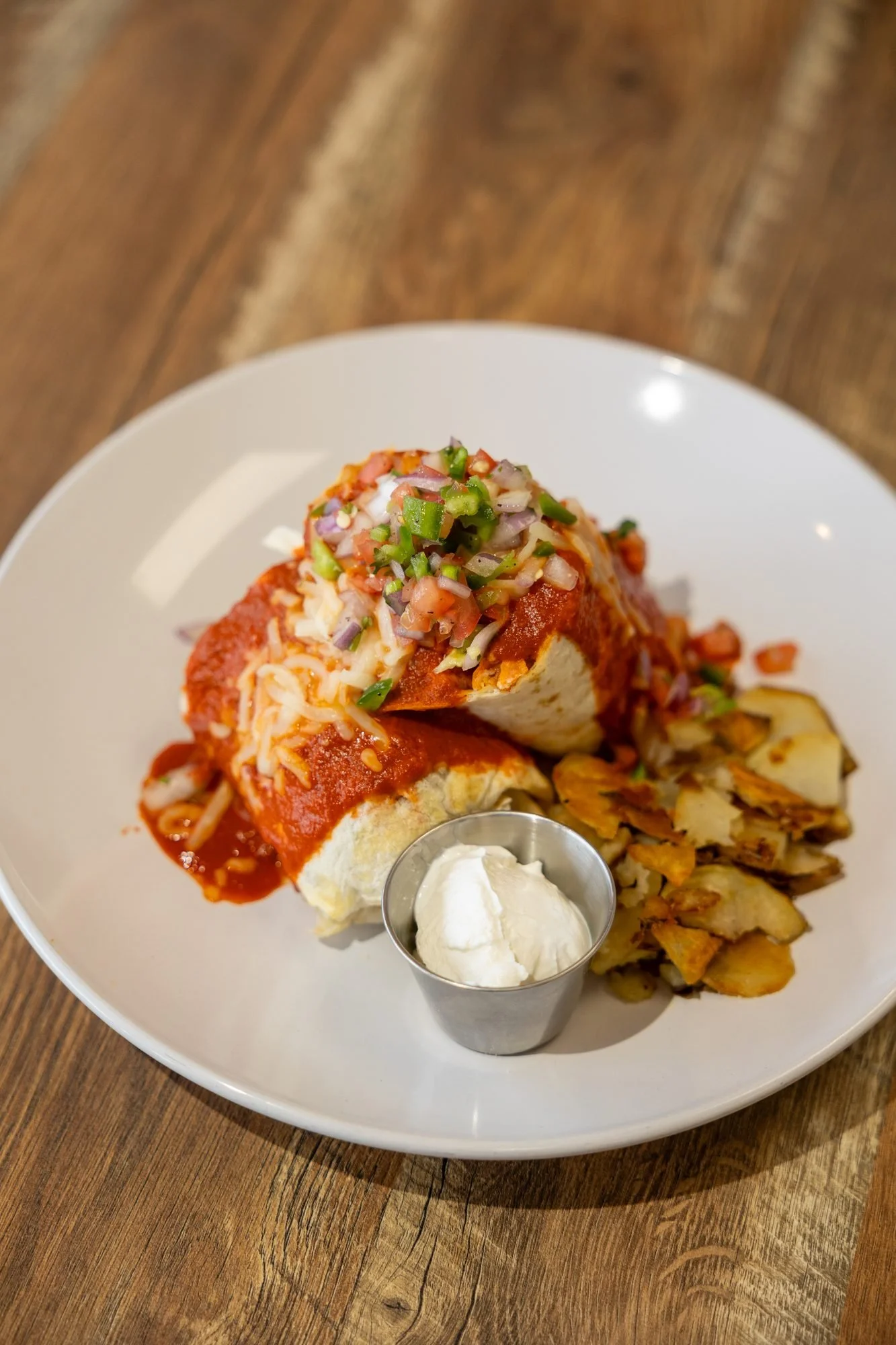
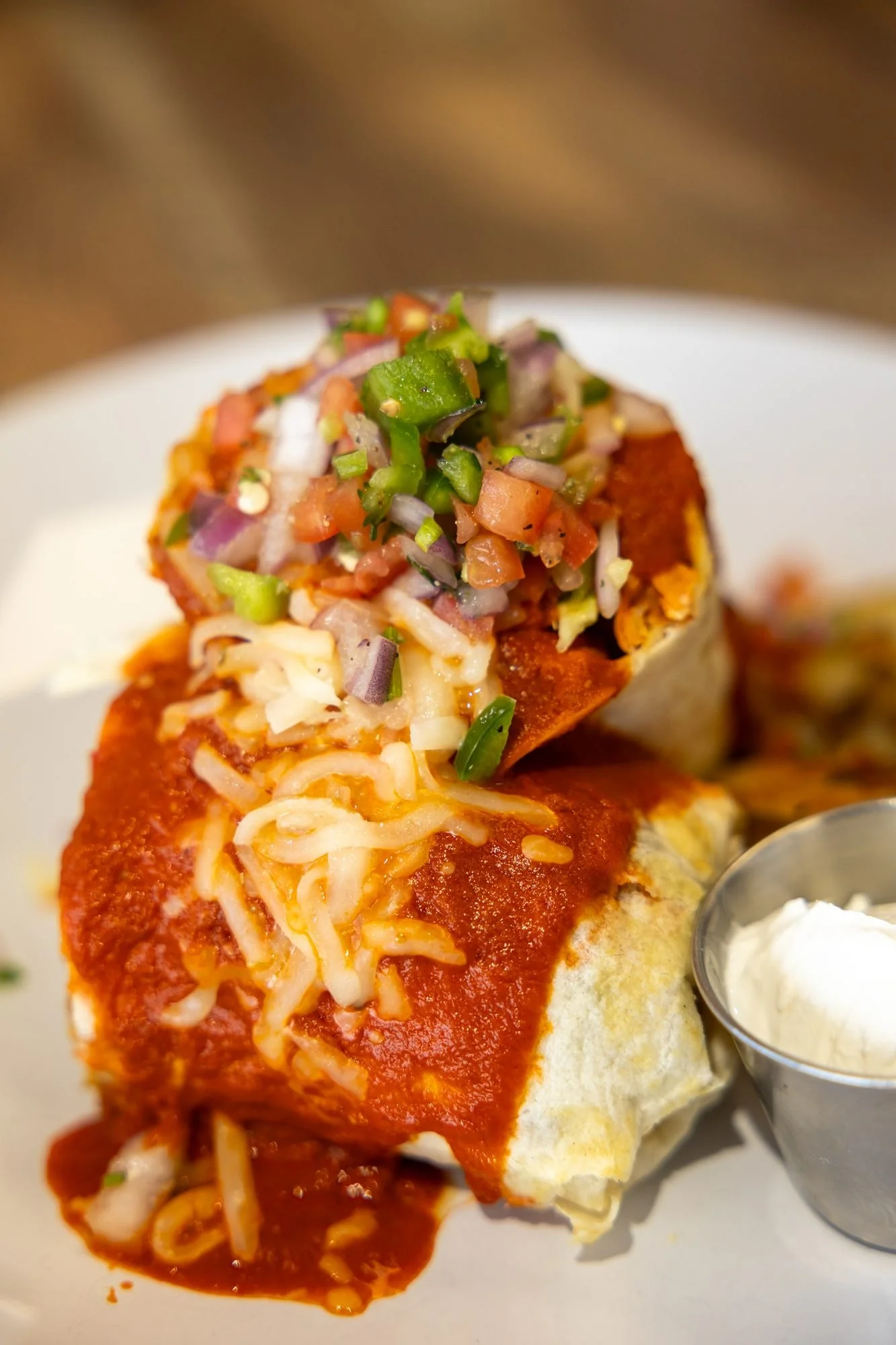
Notice how different those two frames feel even though nothing on the plate moved. That is the whole trick. You do not need ten different dishes or ten different boards. You need one good subject and three deliberate positions for the camera.
Angle one: straight overhead
For a grazing board, this is non-negotiable. Stand on a chair if you have to. The camera points straight down, the board fills the frame edge to edge, and nothing is cropped off. Overhead is the angle that shows abundance, and abundance is the product. It also gives the client a square crop for the grid and a wide crop for the website header from the same click.
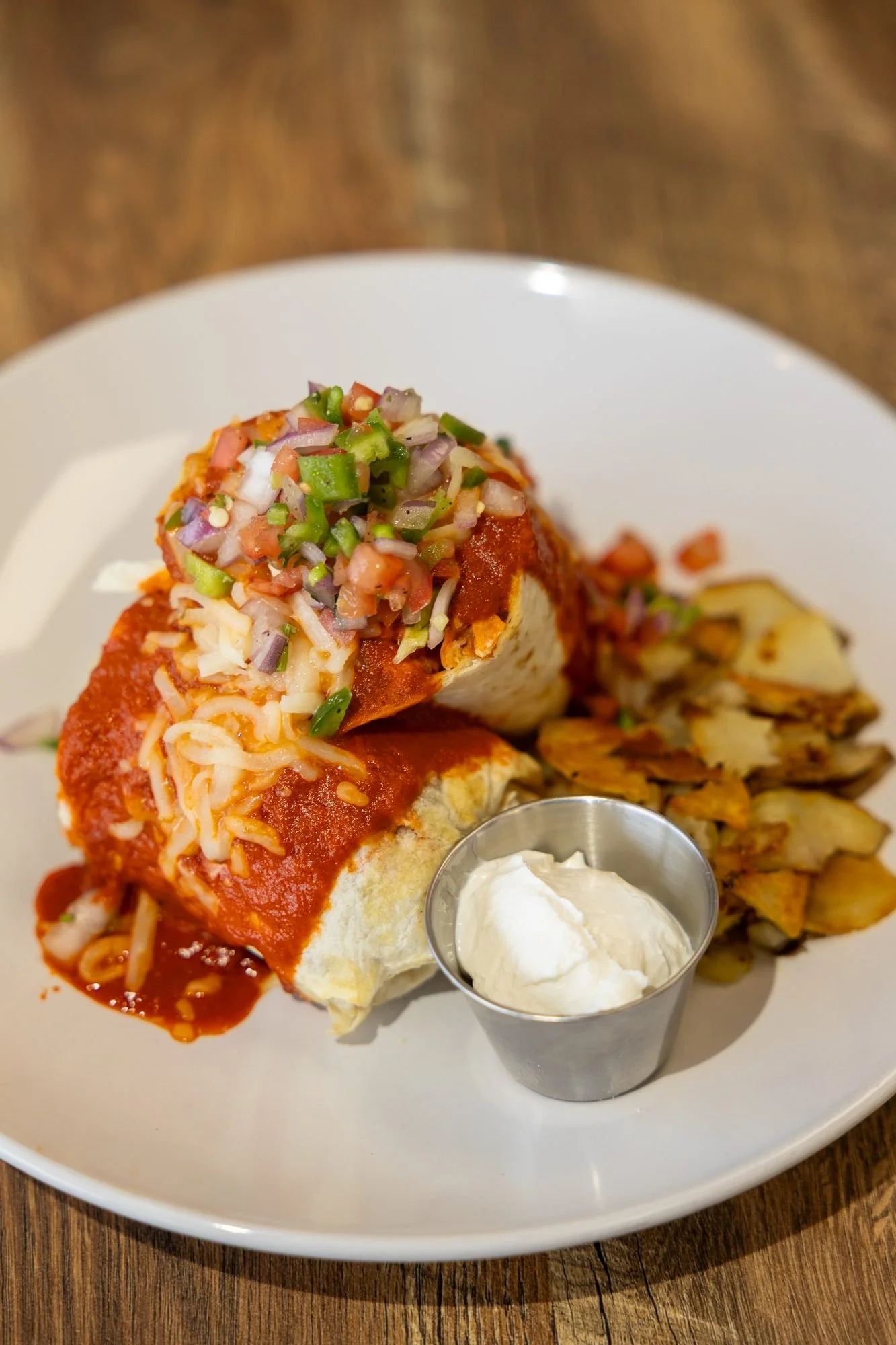
The detail that matters: a plain surface under the board. Wood, slate, or linen. The table at the burrito shoot had a lot of grain, which works for a rustic board and fights a clean modern one. For December I want a darker surface so the reds and greens on the board do the talking.
Angle two: the 45-degree hero
Drop the camera to roughly the height of your chin sitting at the table, and shoot into the board at an angle. This is the frame that gives a board depth: the cheese wedge in front, the folded prosciutto behind it, the little bowl of jam catching light at the back. It is also the angle most people already shoot with their phone, so the difference here is discipline, not gear. Clean the plate edge. Turn the board so the tallest thing is not blocking the prettiest thing. Wait for the light.
Angle three: the detail
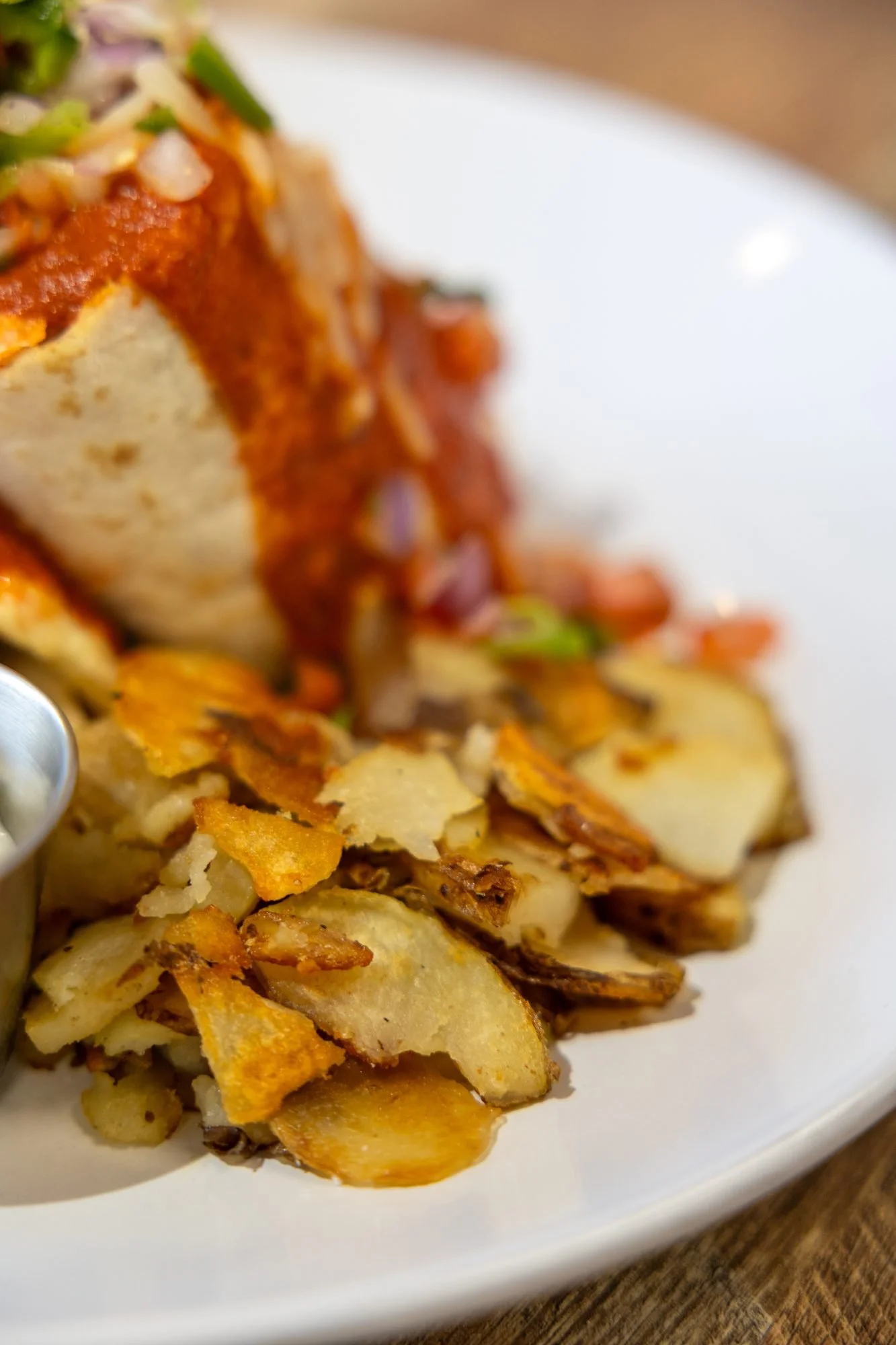
Get close enough that you can see the crystals on the aged cheddar or, in the burrito's case, the crisp edge on the potatoes. This frame does two jobs. On the feed it makes people hungry. In Stories it crops to a vertical without losing anything, because it never depended on the whole subject being in frame.
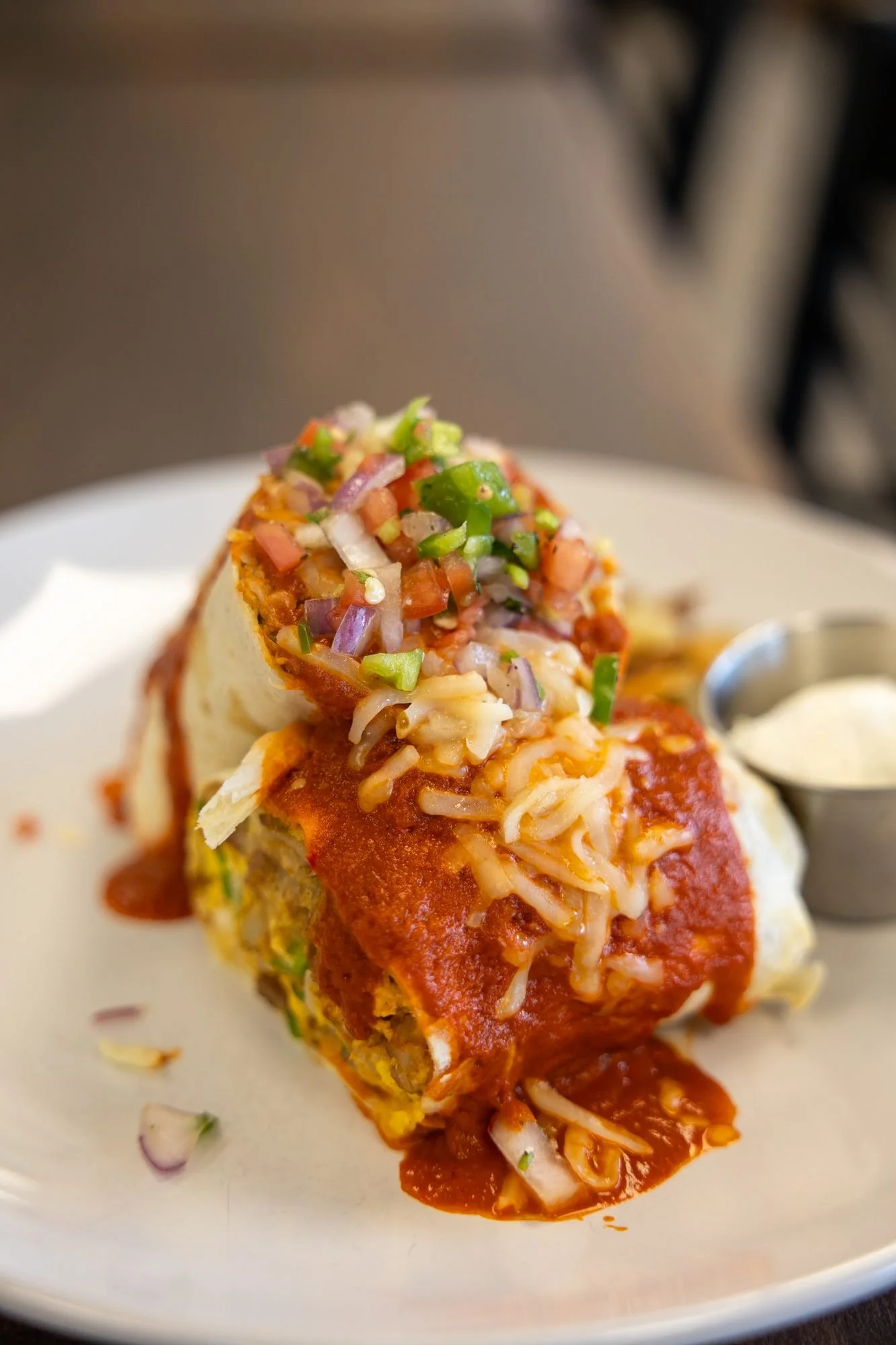
You do not need ten boards. You need one good board and three deliberate camera positions.
How three angles become a month of posts
Say the December top-up shoot covers three boards: a big holiday board, a small gift-sized board, and one built around a single theme (all cheese, or all sweets). Three angles each is nine frames, plus a couple of hands-in-frame shots while the board is being built, plus one of the finished boards boxed for delivery. Call it twelve to fourteen usable images from thirty minutes.
Post two a week from Thanksgiving to Christmas and you still have frames left for the New Year's push. Alternate the angles so the grid does not look like one long overhead. Overhead, detail, hands, 45-degree, repeat. If you want the fuller version of that calendar, the 30 days of content post lays out how I space a month.
The thirty-minute top-up shoot
This is what I have proposed to Roosters Grazing for early December, and it is what I would propose to any board or catering business reading this. Not a half day. Thirty minutes, one location with a window, boards built before I arrive. I shoot the three angles on each board, grab the hands and the boxed shot, and I am gone before the first board needs to go to a customer. It is the most efficient shoot I do, and the frames carry a business through its busiest month. Compare it to the general seasonal content ideas I have written up before and you will see why boards are the easy case: the product is already designed to be looked at.
Before you build your next board, put a piece of dark linen or a slate slab under it and photograph it three ways with your phone: standing on a chair straight above, sitting at the table, and as close as your camera will focus. Do it once with window light and once under your kitchen lights, and look at the two sets side by side. The window will win, and you will never shoot a board under a ceiling light again.
A thin folder is not a problem, it is a starting point. Six frames of a burrito taught me exactly how Roosters Grazing needs to be shot, and thirty minutes in December will give them a feed that looks like the busiest board business in the valley.
I photograph and film food businesses across Cache Valley and Northern Utah from my base in Logan, from thirty-minute top-ups like this one to full monthly content retainers, all under the name Sarah Rasmussen Productions.
See more of my food photography in Logan.
Building boards for December? Let's shoot them before the orders land.
Tell me how many boards you can build on one morning and where the best window in your kitchen is. I'll bring the chair.
Book a top-up📞 Call or Text: 435-764-3606
✉️ sarahrasmussenproductions@gmail.com
📍 Serving Northern Utah & Southern Idaho
